
Table of Contents
- Clear a Blocked Kitchen Sink: Start With the Plunger
- Remove Standing Water and Debris From the Sink
- Use Baking Soda and White Vinegar for Grease Buildup
- Pour Boiling Water Down the Drain Pipe
- The Best Drain Cleaner for Kitchen Sink Clogs
- How to Clean a P-Trap Under Your Sink
- Preventing Kitchen Sink Clogs
- When to Call a Professional Plumber
- Frequently Asked Questions
Last Updated: September 9, 2026
Clear a Blocked Kitchen Sink: Start With the Plunger
A blocked kitchen sink is one of the most disruptive plumbing problems a home can face. The most effective way to clear a blocked kitchen sink is to start with a plunger, as it creates the hydraulic pressure needed to dislodge most common obstructions without damaging your pipes. Homeowners often skip this simple first step.
A plunger works by forcing water against the clog, creating pressure that pushes the obstruction through the drainage system. You need a cup plunger with a flat rim, not the flange type designed for toilets, to get a proper seal on the sink opening.
Before you plunge, block the overflow vent (the small hole near the top of the sink) with a wet cloth. If you leave it open, the pressure escapes through the vent instead of pushing against the clog.
Remove Standing Water and Debris From the Sink
Start by removing any standing water from the sink bowl, as plunging works best when there is enough water to cover the suction cup entirely, but not so much that it splashes everywhere. Use a small container or cup to bail out excess water into a bucket until the sink is about one-quarter full. Pull out any visible debris, food particles, or foreign objects from around the plughole, as these can prevent the plunger from forming a tight seal.
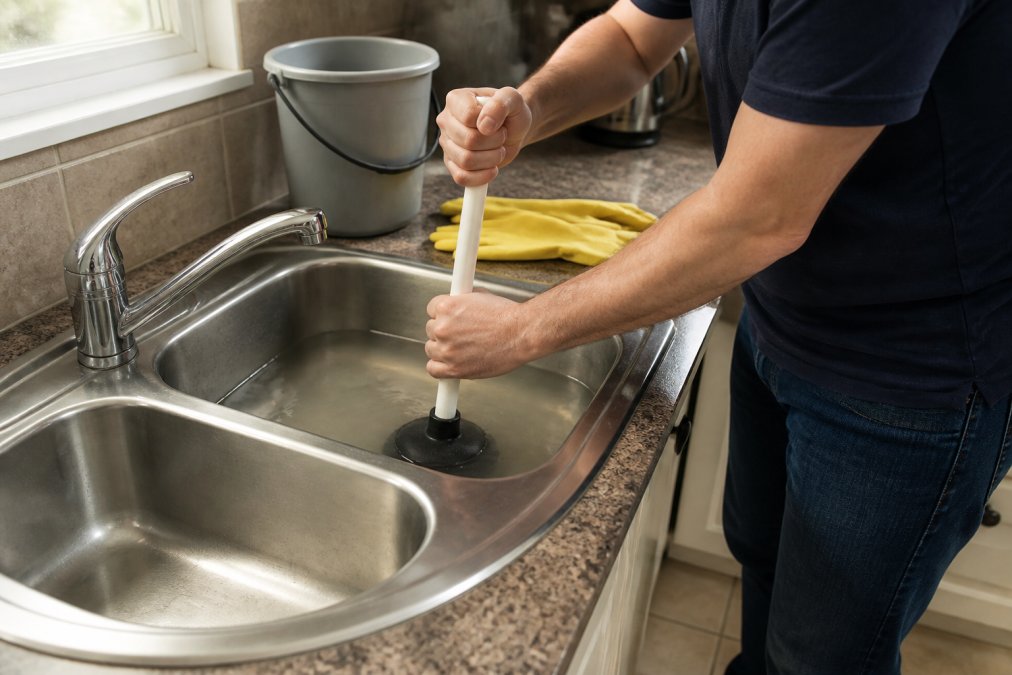
Wearing rubber gloves protects your hands from bacteria. Once the area is clear, position the plunger directly over the plughole and press down firmly to create suction. Use a steady up-and-down motion for about 20 seconds, then pull the plunger away sharply. If water drains freely, the blockage has cleared; if not, repeat a few more times before moving on.
Use Baking Soda and White Vinegar for Grease Buildup
Many kitchen sink clogs are caused by grease buildup that has hardened inside the drain pipe, and this is where a chemical-free reaction of baking soda and white vinegar excels. This eco-friendly method is a reliable alternative to harsh chemical cleaners, which can corrode older pipes and harm the environment. First remove as much standing water as possible, then pour a full cup of baking soda directly down the plughole.
Follow the baking soda with one cup of white vinegar and immediately plug the drain with a stopper or cloth so the fizzing action stays within the pipe. The chemical reaction helps break down grease and organic matter along the pipe walls. Let the mixture sit for at least 30 minutes, or ideally overnight for stubborn clogs, then flush the drain with hot water to wash away the loosened debris.
Avoid using chemical drain cleaners if you have recently tried another product. Mixing different chemical cleaners can create toxic fumes or cause a violent reaction inside the pipe. If a chemical cleaner has not worked, stop and call a professional rather than adding more.
Pour Boiling Water Down the Drain Pipe
Boiling water is one of the simplest and most effective tools for clearing a blocked kitchen sink, particularly when the clog is caused by grease or soap scum. The heat melts the fats and oils that have solidified inside the pipe, allowing them to flow through as a liquid. However, the way you apply the water matters as much as the temperature itself.
Step-by-Step: The Two-Stage Pour
- Clear the sink bowl completely. Any standing water will dilute the boiling water and reduce its effectiveness. Scoop out water with a cup or container until the sink is empty.
- Run hot tap water for 30 seconds. This warms the pipes gradually and prevents thermal shock, which can crack ceramic basins or damage PVC joints.
- Boil a full kettle (about 1.7 litres). Do not use a microwave to heat water; it can superheat unevenly and cause dangerous splattering when poured.
- Pour slowly and steadily down the plughole. Pour in two or three stages, allowing five to ten seconds between each pour. This gives the heat time to work on the grease rather than simply rushing through the pipe.
- Wait five minutes, then test the drain. Run cold water first to check flow. If water drains freely, follow with hot tap water for 30 seconds to flush the melted grease through the system.
When Boiling Water Will Not Work
Boiling water is only effective for grease, soap scum, and soft organic matter. It will not dissolve hair, food scraps, or solid objects. If the sink is draining slowly or not at all after this method, the blockage is likely deeper in the system or composed of material that heat cannot break down. Move on to mechanical methods like plunging or cleaning the P-trap.
Safety Precautions for PVC Pipes
Most modern homes use PVC drainage pipes, which can soften at temperatures above 60°C. While a single pour of boiling water is generally safe for short bursts, repeated use can weaken PVC joints over time. If your home has older metal pipes, boiling water is safe, but be cautious with the sink basin itself; porcelain and ceramic can crack if suddenly exposed to extreme heat. Always pour slowly and avoid splashing.
Never pour boiling water down a drain that has recently been treated with a chemical cleaner. The heat can cause leftover chemicals to vaporise into toxic fumes or trigger a violent reaction inside the pipe. If you have used a chemical product, wait at least 24 hours or flush the drain thoroughly with cold water before attempting any heat-based method.
The Kettle vs. Pot Debate
A kettle with a spout gives you better control over the pour, directing the water precisely into the plughole without splashing. A pot or saucepan works but is more likely to spill; if using a pot, hold it close to the sink surface and pour slowly. For double sinks, block the second plughole with a stopper so the water is forced down the blocked side.
Why This Method Works Best as a Follow-Up
Boiling water is most effective when used after the baking soda and vinegar treatment. The vinegar reaction loosens grease and organic matter from the pipe walls, and the boiling water then melts and flushes it away. Used alone, boiling water can push grease further down the pipe, where it may re-solidify and create a deeper blockage. Always pair it with a mechanical method or natural cleaner for lasting results.
The Best Drain Cleaner for Kitchen Sink Clogs
The best drain cleaner for kitchen sink clogs is not a chemical product at all, but a combination of mechanical methods and natural ingredients that protect your plumbing fixtures. Chemical cleaners are widely available and convenient, but they only dissolve the surface of a blockage and can leave behind corrosive residue that damages pipes over time. For most household clogs, a plunger followed by the baking soda, vinegar, and boiling water sequence resolves the issue safely.
| Method | Best For | Time Needed | Pipe Safety |
|---|---|---|---|
| Plunger | Soft blockages near the plughole | 5-10 minutes | Very safe |
| Baking soda and vinegar | Grease buildup | 30+ minutes | Safe |
| Boiling water | Grease and soap scum | 5 minutes | Safe with care |
| Chemical cleaner | Minor slow drains | 15-30 minutes | Can corrode pipes |
| P-trap cleaning | Objects or heavy sludge | 20-30 minutes | Safe if done carefully |
If you are accustomed to using chemical products, expect to change your approach; the mechanical methods take slightly more effort but deliver longer-lasting results. When a clog resists every DIY method, the issue is often not a simple blockage but a problem deeper in the drainage system, which is where professional equipment becomes necessary.
How to Clean a P-Trap Under Your Sink
The P-trap is the curved section of pipe beneath your sink that holds water to block sewer gases, and it is a common collection point for heavy debris that causes persistent clogs. Cleaning the P-trap is a straightforward DIY repair that resolves blockages that plunging cannot reach, as the obstruction is often sitting inside this curved section. Before you begin, place a bucket directly under the trap to catch the water and debris that will spill out when you open it.
Using a pipe wrench, loosen the two slip nuts at either end of the P-trap; these usually turn by hand if not over-tightened. Remove the curved section and empty its contents into the bucket, then use a stiff wire or an old toothbrush to clear any sludge clinging to the inside walls. Inspect the removed debris to confirm the cause, then reassemble the trap and run water to check for leaks. This typically takes under 30 minutes and prevents the need for more invasive methods.
Preventing Kitchen Sink Clogs
Preventing kitchen sink clogs is far easier than clearing them, and most blockages trace back to a few avoidable habits involving grease and food particles. Never pour cooking oil, fat, or grease down the plughole; instead, collect it in a container and dispose of it in the bin once it solidifies. Install a drain strainer to catch food scraps and debris before they enter the drainage system, and empty it into the rubbish after each use.
Run hot water for 30 seconds after each wash-up session to flush any residue through the pipes before it can harden. A weekly maintenance flush of boiling water, or the baking soda and vinegar method, keeps the pipe walls clear of gradual grease buildup. For homes with older drainage systems or a history of recurring issues, a professional drain inspection can identify weak points before they become emergency blockages.
When to Call a Professional Plumber
Knowing when to stop DIY methods and call a professional can save you time, money, and potential water damage. While many blockages respond to plunging, natural cleaners, and P-trap maintenance, certain signs indicate a deeper problem that home tools cannot reach.
The Diagnostic Checklist: Before You Call
Work through this checklist to determine whether the problem is isolated to your kitchen sink or part of a larger drainage issue:
| Symptom | Likely Cause | DIY Possible? |
|---|---|---|
| Water backs up into the other sink basin | Blockage in the branch drain | Yes, if caught early |
| Water backs up into the bathroom or laundry | Main line blockage | No |
| Gurgling sounds from other drains | Ventilation or main line issue | No |
| Bad odours persist after cleaning | Sewer gas leak or trapped debris | No |
| Multiple fixtures drain slowly | Main line or sewer issue | No |
| Water returns after clearing | Grease cap or tree root intrusion | No |
The 24-Hour Rule
If your sink has been blocked for more than 24 hours despite repeated DIY attempts, call a professional. Prolonged standing water creates a breeding ground for bacteria and can cause damage to cabinetry, flooring, and pipe joints. The cost of a professional visit is almost always lower than the cost of repairing water damage caused by a prolonged leak or overflow.
What a Professional Does That You Cannot
Professional plumbers use equipment that is not available to homeowners:
- CCTV camera inspection A waterproof camera is fed through the pipe to identify the exact location and cause of the blockage. This is the only way to confirm whether the issue is grease, tree roots, a collapsed pipe, or a foreign object.
- High-pressure water jetting Water at pressures up to 4,000 PSI scours the inside of the pipe, removing grease buildup and roots that DIY methods cannot touch.
- Electric eel or drain auger A motorised cable that cuts through blockages deeper in the system, far beyond the reach of a plunger or hand-held wire.
Questions to Ask Before Hiring a Plumber
Not all plumbing services are equal. Before you book, ask these questions:
- Are you licensed and insured? In Australia, plumbers must hold a licence issued by their state or territory authority. Ask to see it before work begins.
- Do you offer a no-clear, no-fee guarantee? This protects you if the blockage cannot be cleared.
- Will you provide a fixed quote before starting? Avoid hourly rates that can escalate quickly.
- Do you use CCTV inspection as standard practice? A plumber who clears a blockage without inspecting the pipe is only treating the symptom.
- What is your call-out fee, and is it deducted from the final cost? Some companies charge a separate call-out fee that is not credited toward the job.
The Cost Reality in Australia
While prices vary by the complexity of the job, professional help is often the more economical choice compared to the cost of repeated chemical cleaners and potential water damage from a prolonged leak.
When It Is an Emergency
Some situations require immediate professional attention:
- Water is backing up into multiple fixtures or flooding the floor
- You suspect a gas leak or sewer gas is entering the home
- The blockage is accompanied by a foul odour that persists after cleaning
- You have used chemical cleaners and the sink is still blocked; do not add more chemicals
If your sink has been blocked for more than a day, if multiple drains are affected, or if you suspect tree roots have invaded your pipes, DIY methods will only provide temporary relief. Call a licensed plumber to diagnose the issue with CCTV inspection before the problem causes water damage.
What to Expect During a Professional Visit
A reputable plumber will begin with a visual inspection, then use CCTV to locate the blockage. They should explain what they find and provide options before proceeding with any work. After clearing the blockage, they should run water to confirm the fix and provide advice on preventing future issues. A professional who clears the drain without showing you the CCTV footage or explaining the cause is not providing a complete service.
Frequently Asked Questions
How do you unblock a badly blocked kitchen sink?
For a badly blocked kitchen sink, start by removing standing water and cleaning the sink strainer. Use a plunger with a tight seal over the plughole. If the water still won’t drain, clean the P-trap by placing a bucket underneath and unscrewing the fittings to remove debris. For grease buildup, pour baking soda and white vinegar down the drain followed by boiling water.
When should you call a professional plumber for a sink blockage?
Call a professional plumber when DIY methods like plunging, boiling water, baking soda and vinegar, or cleaning the P-trap don’t clear the blockage. Persistent clogs can indicate problems deeper in the drainage system, such as tree roots or pipe damage. A licensed plumber can use CCTV inspection to find the cause and clear the drain without excavation.
What is the strongest thing to unclog a sink?
The strongest approach is physical removal rather than a chemical cleaner. A plumbing snake can break through solid blockages, while cleaning the P-trap removes debris directly. For grease buildup, a combination of baking soda, white vinegar, and boiling water is effective and safer for pipes than chemical cleaners, which can corrode older plumbing over time.