
Table of Contents
- Why Property Owners Look for a Nuflow Perth Central Alternative
- Trenchless Pipe Repair vs Traditional Excavation: What Changes
- Comparing Trenchless Providers and Drainage Solutions
- Trenchless Pipe Repair Costs: What Drives the Quote
- Emergency Plumber for Slow Drain: When to Call and What to Expect
- DIY vs Professional Drain Clearing: An Honest Assessment
- How Drains Plus Handles Blocked Drains and Pipe Rehabilitation
- Frequently Asked Questions
Last Updated: September 16, 2026
Why Property Owners Look for a Nuflow Perth Central Alternative
When a sewer line fails, most property owners search for a nuflow perth central alternative wanting the same outcome, a repaired pipe without a demolished garden, but with clearer pricing, faster response, and a guarantee they can hold someone to. Trenchless pipe repair covers any method that rehabilitates or replaces underground drainage without open excavation, from CCTV diagnostics to cured-in-place pipe liners.
Standards Australia plumbing and drainage standards
Trenchless Pipe Repair vs Traditional Excavation: What Changes
Trenchless pipe repair replaces or rehabilitates a buried pipe through existing access points, without digging a continuous trench along its length. Traditional excavation removes the soil above the pipe, replaces the section, and reinstates the surface.
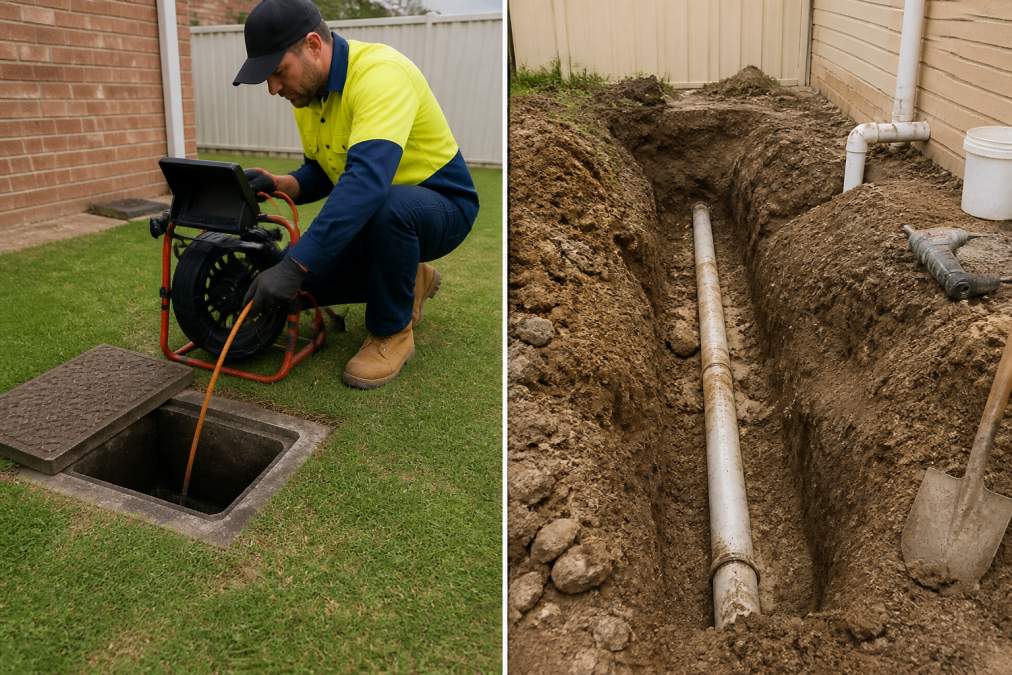
The practical differences are substantial:
- Surface damage: Excavation destroys paving, lawns, driveways and sometimes tree roots. Trenchless work typically needs one or two access pits.
- Time on site: Excavation runs for days or weeks; most residential trenchless relining is done in a single day.
- Structural risk: Digging near foundations, retaining walls or heritage structures introduces movement risk. No-dig methods avoid it.
- Cost profile: Excavation quotes include reinstatement; trenchless quotes concentrate spend on the liner and labour.
No-Dig Excavation and Its Limits
No-dig excavation is not suitable for every defect. If a pipe has fully collapsed, is severely misaligned, or sits under a structural slab with no viable access point, excavation may still be the correct answer. Never accept a relining quote without a CCTV survey first, ask for the footage.
Comparing Trenchless Providers and Drainage Solutions
Providers fall into three broad categories: relining specialists, high-pressure clearing services, and structural rehabilitation firms for complex sites. Each solves a different problem, and the method determines what your pipe is made of when they finish.
| Provider Type | Primary Method | Best For | Main Limitation |
|---|---|---|---|
| CIPP relining specialist | Resin-impregnated liners | Structural cracks, root intrusion | Requires inspection to confirm feasibility |
| Hydro-jetting and root cutting | High-pressure water, mechanical cutting | Immediate blockages, maintenance | Does not restore structural integrity |
| Structural rehabilitation firm | CIPP, junction sealing, lateral repairs | Complex, heritage or sensitive sites | Subject to project scheduling |
| Full-service drain company | Diagnostics, clearing and relining | One provider from diagnosis to repair | Pricing requires site assessment |
What the Liner Is Actually Made Of
The table tells you which method a provider uses, not what goes into your pipe, the detail most quotes leave out. A cured-in-place pipe liner is a felt or fibreglass carrier saturated with a thermosetting resin. The carrier determines thickness and flex; the resin determines chemical resistance and cure behaviour. The three resin families are polyester, vinyl ester and epoxy.
- Polyester resin is the most common and least expensive. It handles typical domestic sewage and stormwater loads but has limited resistance to strong solvents and industrial effluent.
- Vinyl ester resin sits in the middle, resisting a wider range of chemicals including the fats, oils and grease in commercial kitchen lines. It is the usual specification for trade waste.
- Epoxy resin offers the highest chemical and temperature resistance and the lowest shrinkage on cure. It suits industrial sewer maintenance, high-temperature discharge and aggressive effluent, and costs more per metre.
Why Ground Conditions Change the Specification
Reactive clay soils, common across many Australian metropolitan areas, shrink and swell with moisture, placing cyclical load on buried pipes. A liner specified for stable sandy soil may not carry the same long-term structural rating in reactive clay. A specification naming only the method, “we use CIPP”, is incomplete. Ask which resin, what wall thickness, and what structural rating the liner carries for the soil and traffic load at your address.
The Standards Behind the Specification
Pipe relining in Australia is governed by standards that set out how liners are tested, installed and cured. Standards Australia plumbing and drainage standards A provider working to those standards should be able to tell you which standard the liner is tested against and provide the manufacturer’s technical data sheet. If they cannot produce the data sheet, you are being asked to trust a brand name rather than a specification.
How to Read a Relining Quote
When you compare quotes, put them side by side on these five lines rather than on the headline price:
- Resin type, polyester, vinyl ester or epoxy, and why it suits your pipe’s contents.
- Liner thickness, in millimetres, matched to pipe diameter and load.
- Structural rating, the load the cured liner is rated to carry.
- Cure method, how the resin is set and verified.
- Warranty terms, what is covered, for how long, and whether it is transferable on sale.
A quote that names a brand but not a resin, a thickness and a structural rating is not a specification. It is a price. Ask for the missing three lines before you sign.
Pipe Relining Solutions: CIPP Specialists
Pipe Relining Solutions focuses on cured-in-place pipe work for damaged sewer and stormwater systems. The resin-impregnated liner is inverted into the existing pipe, inflated against the wall, and cured to form a new structural pipe inside the old one. The appeal: no excavation, minimal disruption to landscaping, and a liner designed to meet Australian standards for longevity.
Total Drain Cleaning: Hydro-Jetting and Root Cutting
Total Drain Cleaning concentrates on high-pressure water jetting and mechanical root cutting. For a blockage caused by grease, scale or tree roots, hydro-jetting clears the line quickly, and mechanical root cutting removes intruding roots rather than pushing them aside. Where this falls short is structural: if the pipe is cracked or collapsed, clearing solves the symptom, not the cause, and the blockage returns.
Relining WA: Structural Rehabilitation for Complex Sites
Relining WA handles structural CIPP lining, junction sealing and lateral connection repairs, focusing on projects where excavation is not viable, including heritage and sensitive sites. Materials are specified for Australian ground conditions, which matters in reactive clay soils. The trade-off is scheduling: complex rehabilitation is planned around project timelines rather than same-day callouts.
Trenchless Pipe Repair Costs: What Drives the Quote
Trenchless pipe repair costs depend on four variables: pipe diameter and run length, the number and type of defects, access difficulty, and whether the work is structural relining or a localised point repair.
The Cost Components, Line by Line
Every trenchless quote is built from the same building blocks. Ask for each one to be itemised:
- CCTV inspection and report, the diagnostic step that determines feasibility. Some providers bundle it into the relining price; others charge separately.
- Access and setup, excavating one or two access pits, protecting surfaces, and getting equipment to the pipe. A rear-yard run with clear access costs less than a pipe under a concrete driveway or finished floor.
- Liner and resin, priced per lineal metre and driven by diameter, thickness and resin type. An epoxy liner for trade waste costs more per metre than a polyester liner for a domestic sewer.
- Labour and cure time, most residential relining is done in a single day, but longer runs, multiple defects or junction work extend the schedule.
- Reinstatement, backfilling and making good the access pits. This is where trenchless saves most against excavation: you reinstate a pit, not a trench.
- Warranty and compliance, the paperwork behind the work, including the manufacturer’s data sheet and any certification of the cure.
How Trenchless Compares with Excavation on Cost
The headline price of excavation often looks lower than relining. The comparison only becomes honest when you add the costs excavation quotes frequently exclude:
- Surface reinstatement, paving, concrete, tiles, turf and garden beds removed to open the trench.
- Landscaping and tree protection, established plants and root systems near the trench line.
- Structural risk, movement or cracking near foundations, retaining walls or heritage structures, plus the cost of remedying it.
- Time and access, days or weeks of disruption, plus alternative access or temporary facilities.
- Making good, the difference between a repaired pipe and a property that looks like it was never dug up.
Point Repair vs Full Relining: Two Different Price Tags
A localised point repair addresses a single defect, one crack, one root intrusion, one failed joint, by lining or sleeving just that section. A full reline rehabilitates the entire run between access points. Point repair is cheaper, using less liner and time, but only suits a pipe that is otherwise sound. If the CCTV survey shows multiple defects or general deterioration, a point repair is a short-term fix and you will pay again. The survey footage tells you which you need.
Why You Cannot Get a Firm Phone Quote
A firm price requires knowing the pipe diameter, run length, defect type and access conditions, none visible from a phone call. A provider quoting a firm figure without a survey is guessing, and the guess is usually resolved in their favour on site. The honest sequence is survey first, then quote:
- CCTV drain inspection to identify the defect and its location
- Assessment of access points and pipe condition
- Recommendation of relining, point repair or clearing
- Written quote itemising liner, labour and any reinstatement
Accepting a relining quote without seeing the CCTV footage is the single most common way homeowners overpay. If the provider will not show you the survey, get a second opinion before signing.
When you compare two quotes, ask each provider to split the price into liner, labour and reinstatement. A quote that bundles everything into one figure cannot be compared, and the bundle is where padding hides.
Emergency Plumber for Slow Drain: When to Call and What to Expect
Call an emergency plumber for a slow drain when water backs up into multiple fixtures, sewage odour appears, or the drain stops entirely. A single slow fixture can usually wait for a scheduled visit; multiple slow fixtures point to a main line problem.
DIY vs Professional Drain Clearing: An Honest Assessment
DIY drain clearing is reasonable for a single slow basin or shower with a hair or soap blockage, a plunger, drain snake or bucket of hot water often clears it. Avoid chemical cleaners: they corrode older pipework and tell you nothing about the cause.
Call a professional when:
- Multiple fixtures drain slowly at once
- You suspect tree root intrusion
- The blockage returns within weeks
- Sewage is backing up
- The property is commercial and downtime is costly
If a blockage returns three times in a year, stop paying for clearing and pay once for a camera inspection. The footage usually reveals whether you need relining or just a change in what goes down the sink.
How Drains Plus Handles Blocked Drains and Pipe Rehabilitation
Drains Plus approaches drainage work as a diagnostic problem first. Every job includes a complimentary plumbing health check, so you leave with a clear picture of your pipework rather than just a cleared line. The team has 25 years of experience across residential and commercial sites and has cleared more than 20,000 drains, so most blockage patterns are recognisable on arrival.
Frequently Asked Questions
What is the typical cost of installing pipe relining in Australia?
Trenchless pipe repair costs vary widely depending on pipe diameter, length, access difficulty, and the extent of damage found during CCTV drain inspection. A short point repair on a residential line sits at the lower end, while full-length structural relining of a commercial sewer main costs considerably more. Most providers quote after a site assessment rather than over the phone. Ask for a written breakdown covering inspection, materials, and labour before approving work.
How long does pipe relining last?
A properly installed cured-in-place pipe liner using resin-impregnated liners typically carries a design life of 50 years or more when it meets Australian standards and the host pipe is structurally sound. Longevity depends on correct surface preparation, resin selection for the site’s conditions, and whether root intrusion or ground movement is addressed. Ask your provider what warranty they offer on the liner itself, separate from any workmanship guarantee.
Is pipe relining suitable for all types of pipe damage?
No. Relining works well for cracked, corroded, or root-damaged pipes that still hold their general shape. It is not suitable for collapsed sections, pipes with significant deformation, or lines where the grade has failed. A CCTV drain inspection determines whether pipe rehabilitation is viable or whether section replacement is needed. Providers should show you the footage and explain why relining will or will not work on your line.
What are the benefits of trenchless pipe repair compared to traditional excavation?
Trenchless technology avoids digging up driveways, paving, gardens, and building foundations. That means less disruption, faster completion, and no reinstatement costs for landscaping or concrete. For commercial properties, it also means drainage maintenance can happen without closing the site. The trade-off is that trenchless methods suit specific damage types, so a drainage system assessment comes first to confirm the approach will actually solve the problem.
How do I choose a reliable blocked drain specialist?
Check licensing, ask how many drains the company has cleared, and confirm what happens if the blockage cannot be removed. A clear guarantee, such as no-clear, no-fee, removes the risk of paying for a failed call-out. Ask whether CCTV drain inspection and a plumbing health check are included, since these reveal the cause rather than just clearing symptoms. Request references from commercial clients if you need ongoing preventative maintenance.
A failing drain rarely announces itself at a convenient time, and the gap between a cleared blockage and a properly rehabilitated pipe is where most property owners lose money twice. Drains Plus closes that gap with 24/7 availability, a complimentary plumbing health check on every job, and a no-clear, no-fee guarantee backed by more than two decades of local drainage work. Call now to book an inspection and get a straight answer about what your pipes actually need.